Deterministic authority + agentic investigation
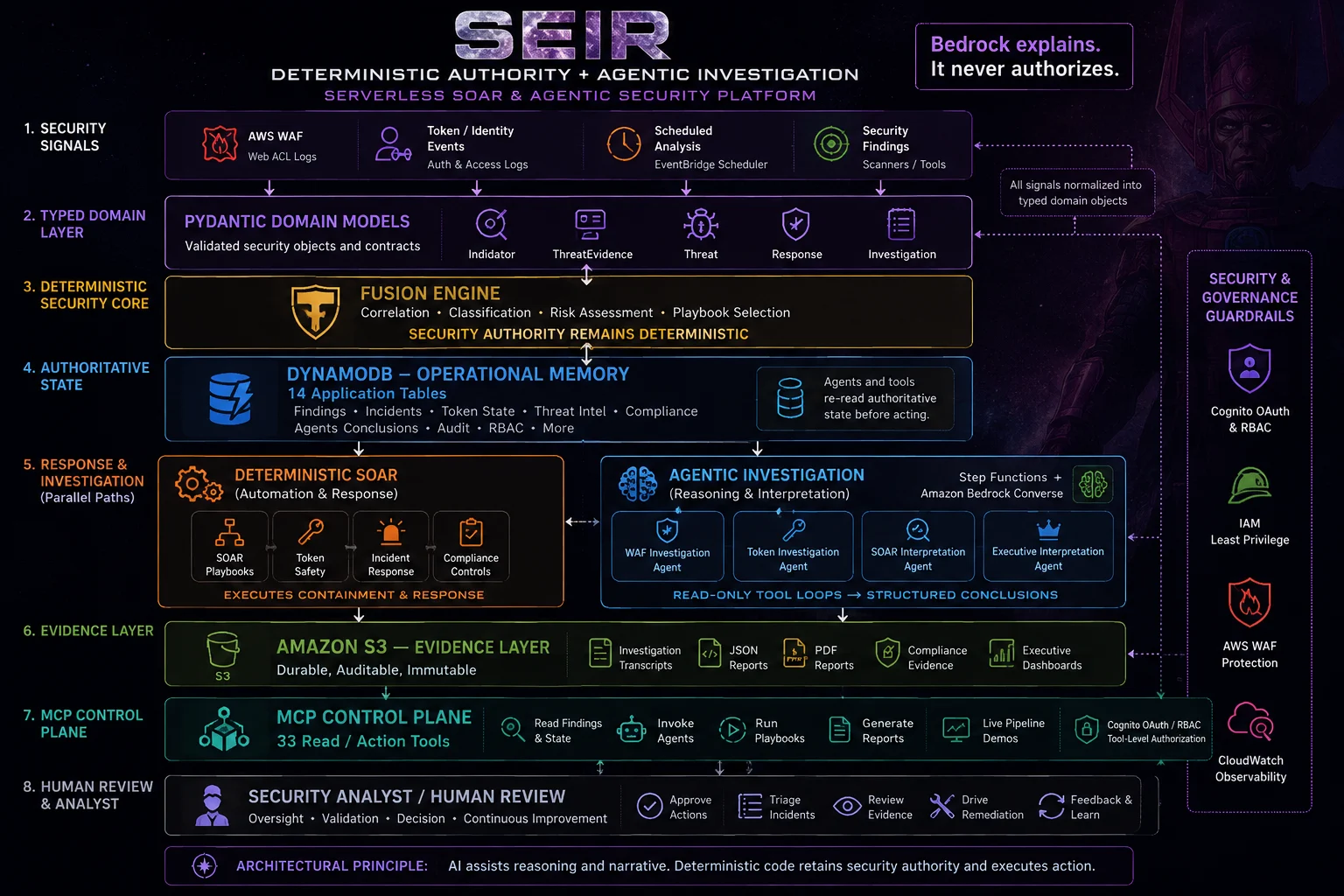
Eight layers from signal to human review. Pydantic types every signal, Fusion decides, DynamoDB remembers, S3 proves, and Bedrock explains.
Diagrams · 39 views across 12 projects
How the platforms fit together: trust boundaries, data paths, and the order things happen in. Expand any diagram to zoom and pan. Each one links to its full case study.
Eight layers from signal to human review. Pydantic types every signal, Fusion decides, DynamoDB remembers, S3 proves, and Bedrock explains.
Three-layer authorization in front. EventBridge fans each finding out to four agents, and Bedrock explains but never authorizes.
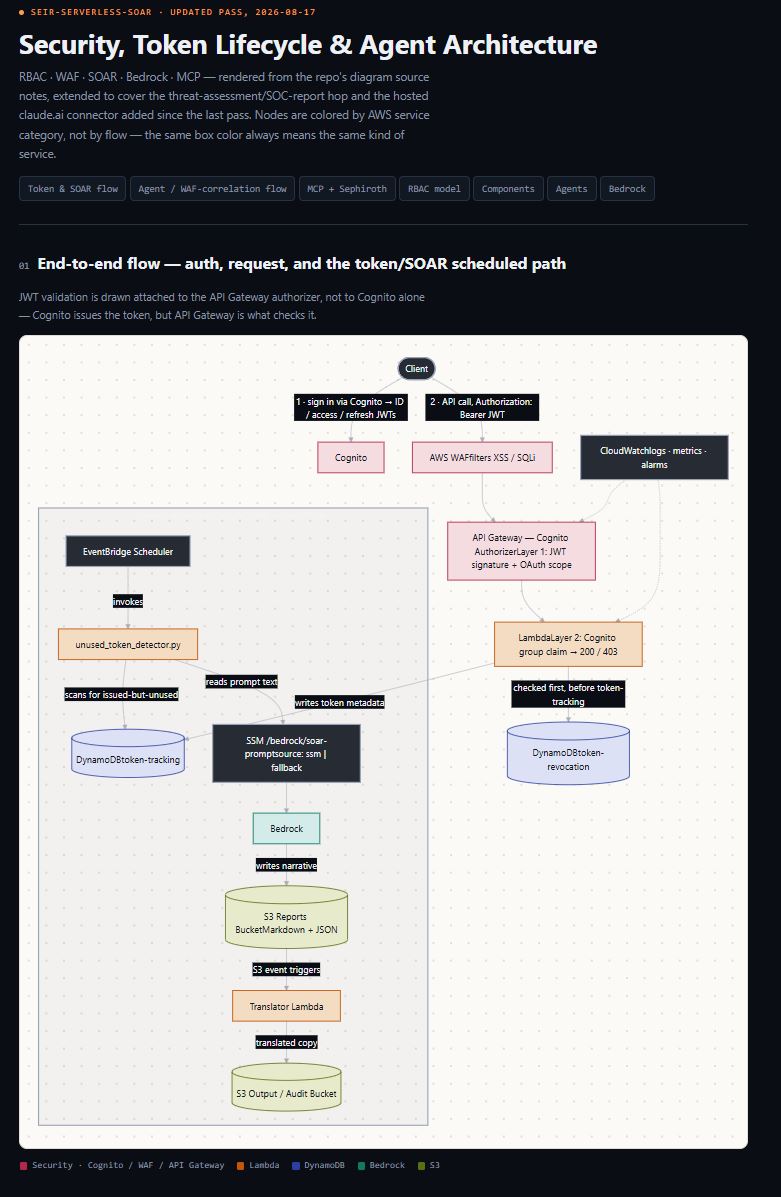
JWT validation sits at the API Gateway authorizer. A scheduled detector finds unused tokens, and Bedrock writes the narrative.
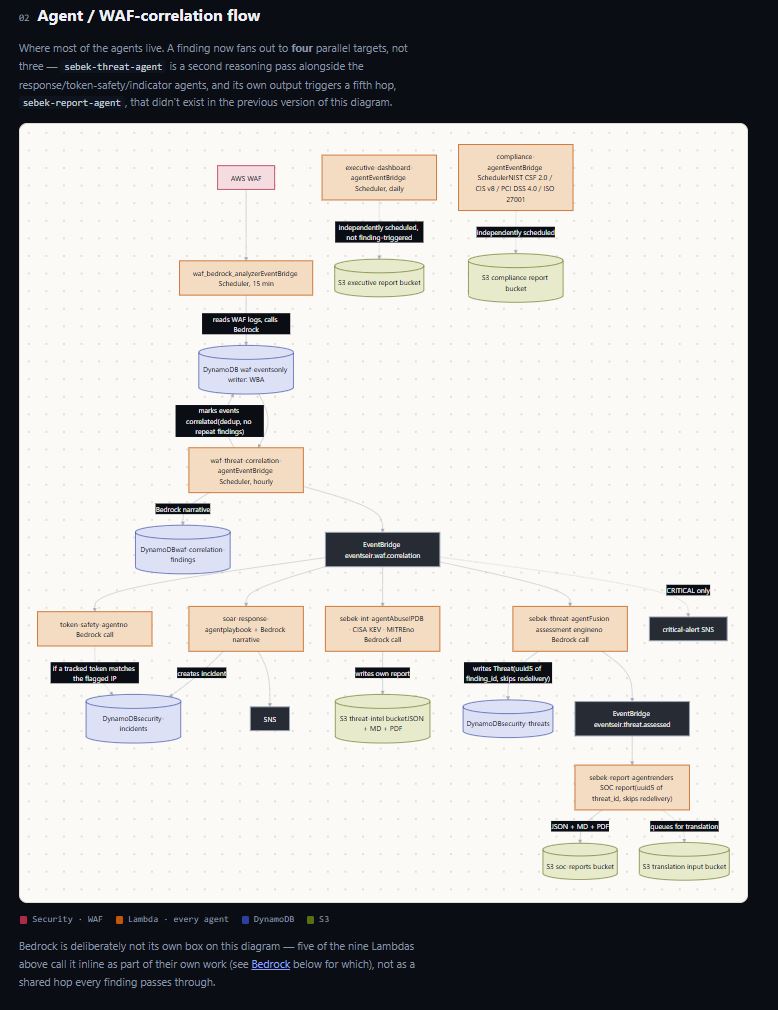
Each correlated finding fans out to four parallel agents, and threat assessment triggers a fifth hop for the SOC report.
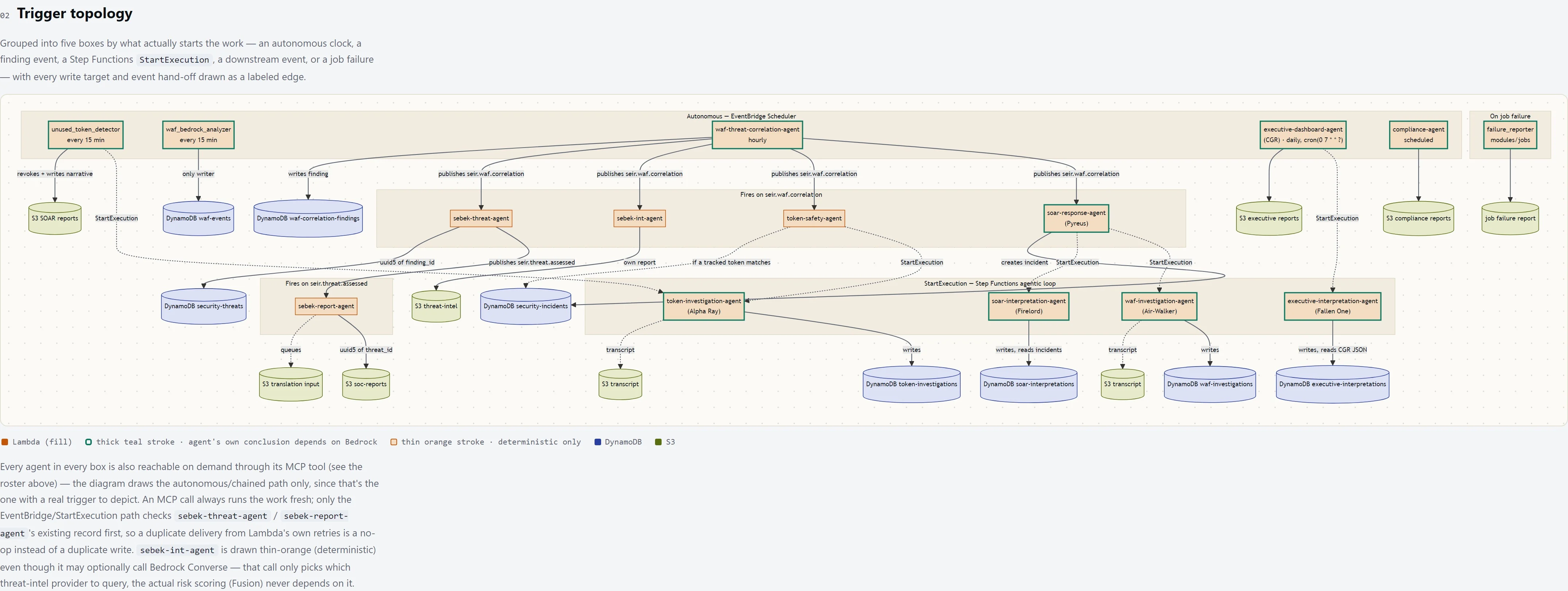
What starts each agent: the scheduler, a finding event, a Step Functions StartExecution, a downstream event, or a job failure.
Fourteen tables hold authoritative state. Events route work; agents and MCP tools re-read the table instead of trusting the payload.
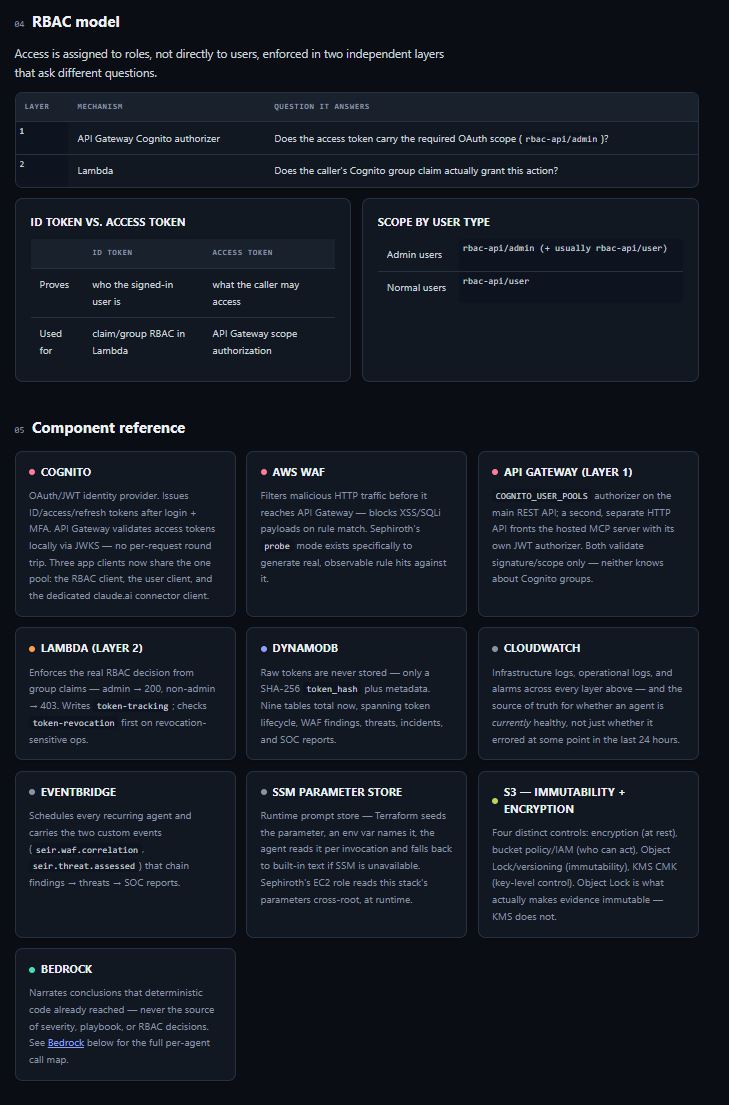
You shall not pass: two independent gates ask different questions. Does the token carry the scope, and does the caller's group grant the action? Hover to read the reference.
Scope check at API Gateway, group check in Lambda, and a scheduled detector for issued-but-unused tokens.
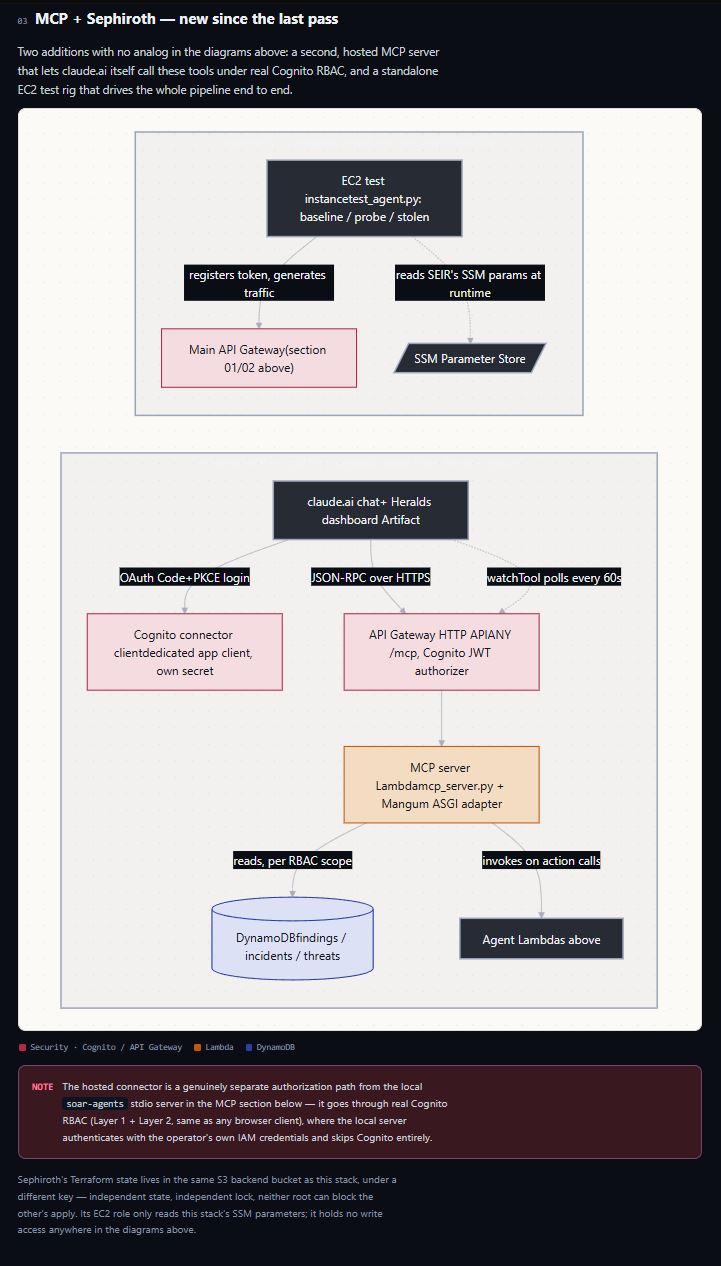
A hosted MCP server lets claude.ai call SEIR tools under real Cognito RBAC, and an EC2 rig drives the pipeline end to end.
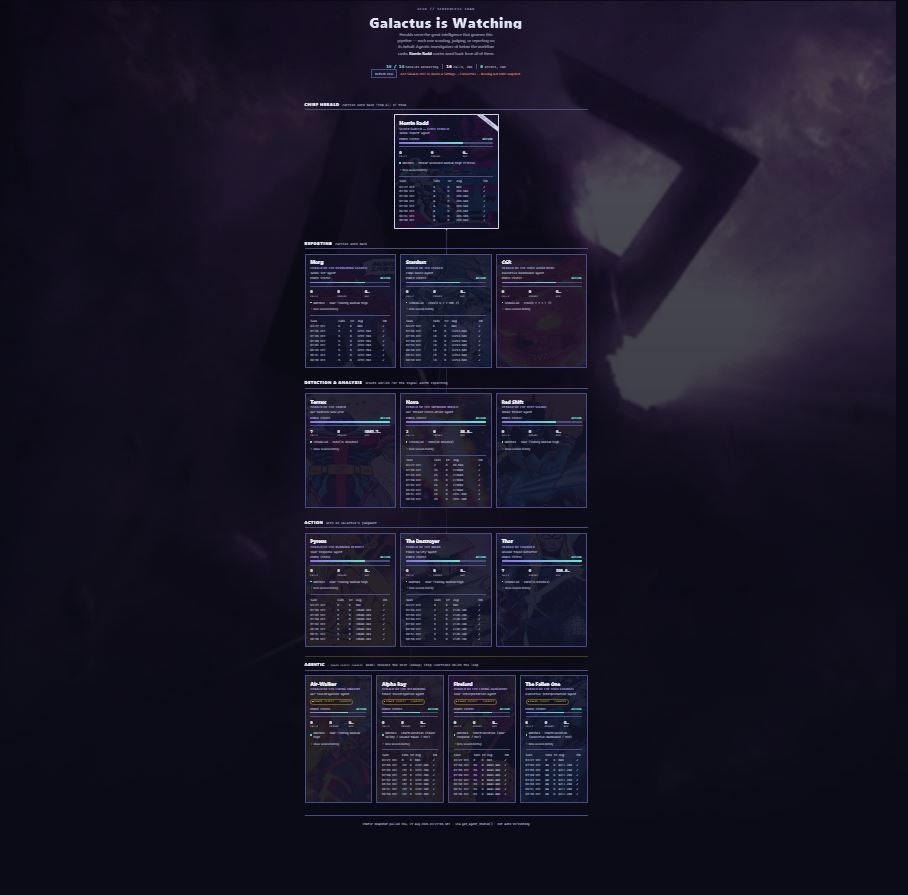
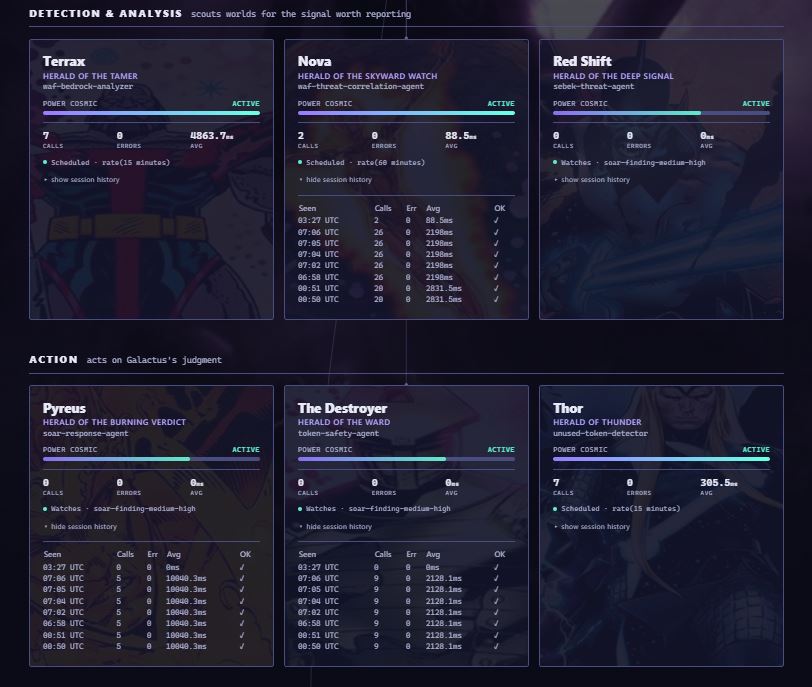
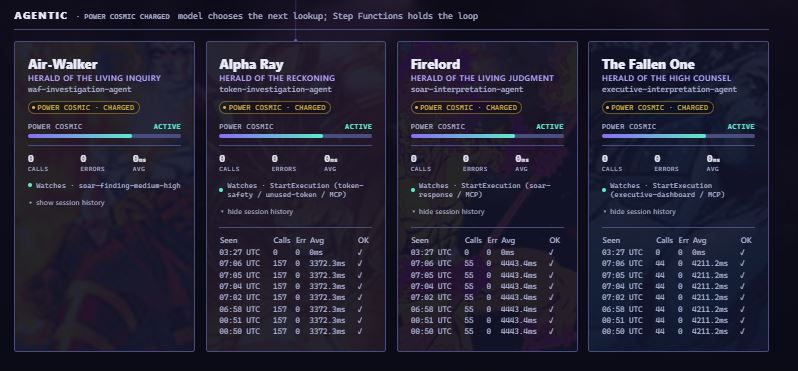
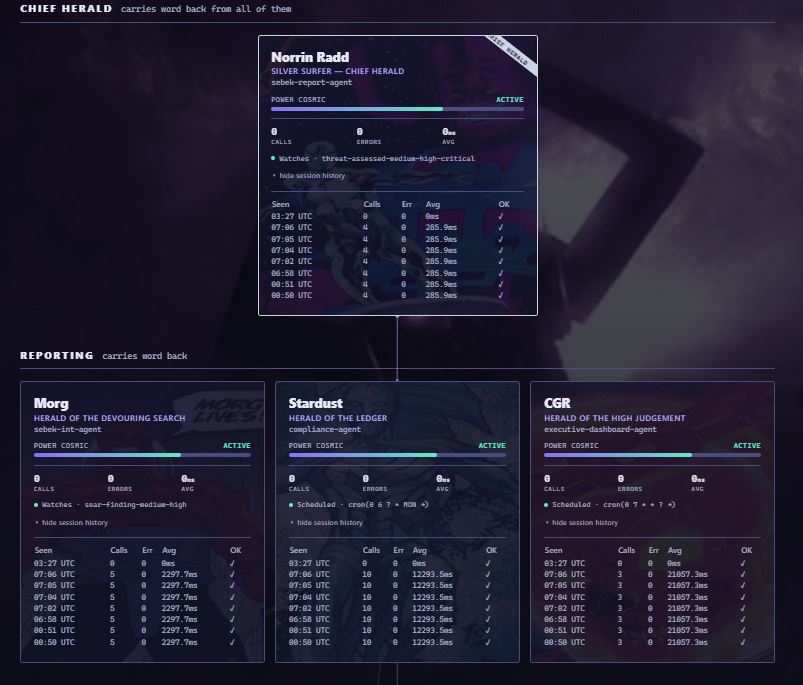
The operator view of every agent: calls, errors, latency, and what triggers it, grouped by role.
Deterministic detectors and responders, each with its schedule or event trigger and recent session history.
Four Step Functions + Bedrock investigators. The model picks the next read-only lookup; Step Functions owns the loop.
Reporting agents carry findings back as SOC, compliance, and executive reports.
Every matter has a board; AI proposes and the firm decides. A redaction gateway sits in front of every model read, and work rides SOAR's shared jobs queues.
The same entitlements apply in the Counsel Console, over MCP, and on raw /jobs calls.
Three control planes share one jobs module. Every worker reads case documents only through redaction.
CloudFront SPA, Cognito PKCE + MFA, a JWT-checked BFF, and lexical OpenSearch.
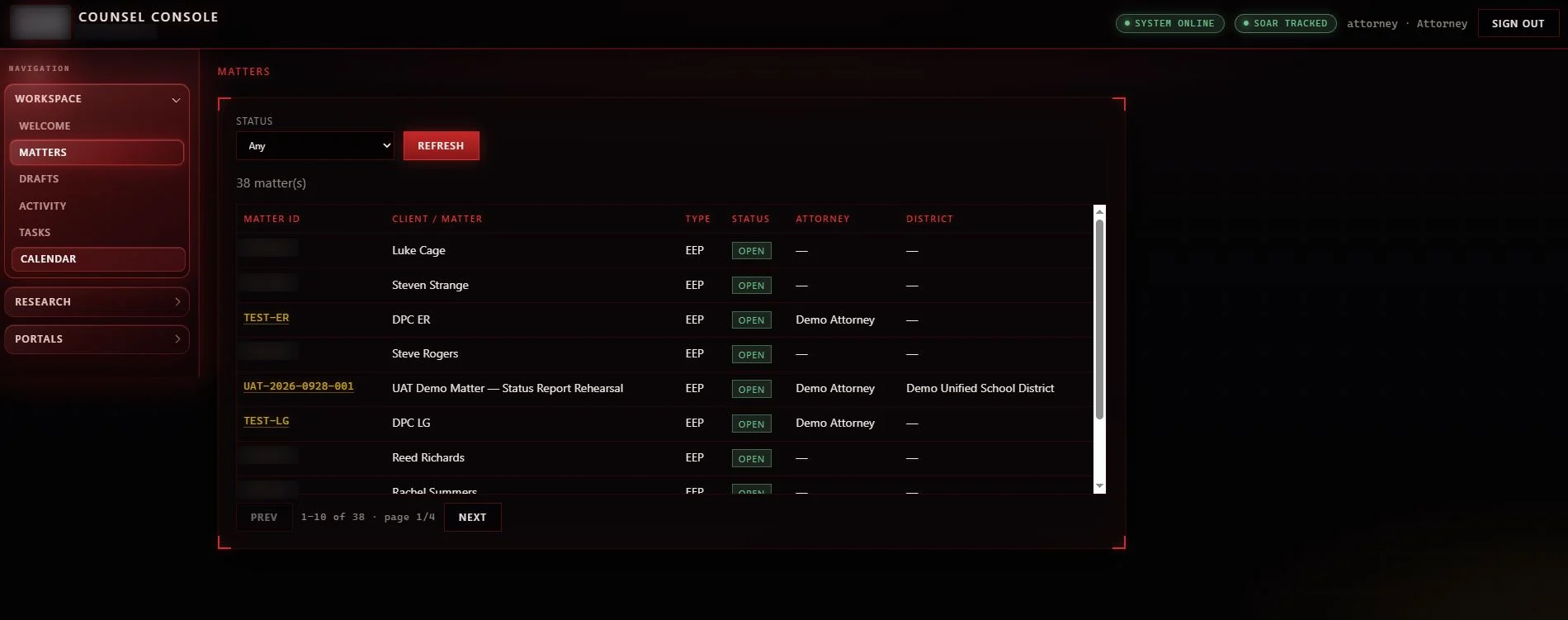
The Counsel Console's matter list: status, attorney, and district per matter. Shown with test and UAT data; IDs masked.
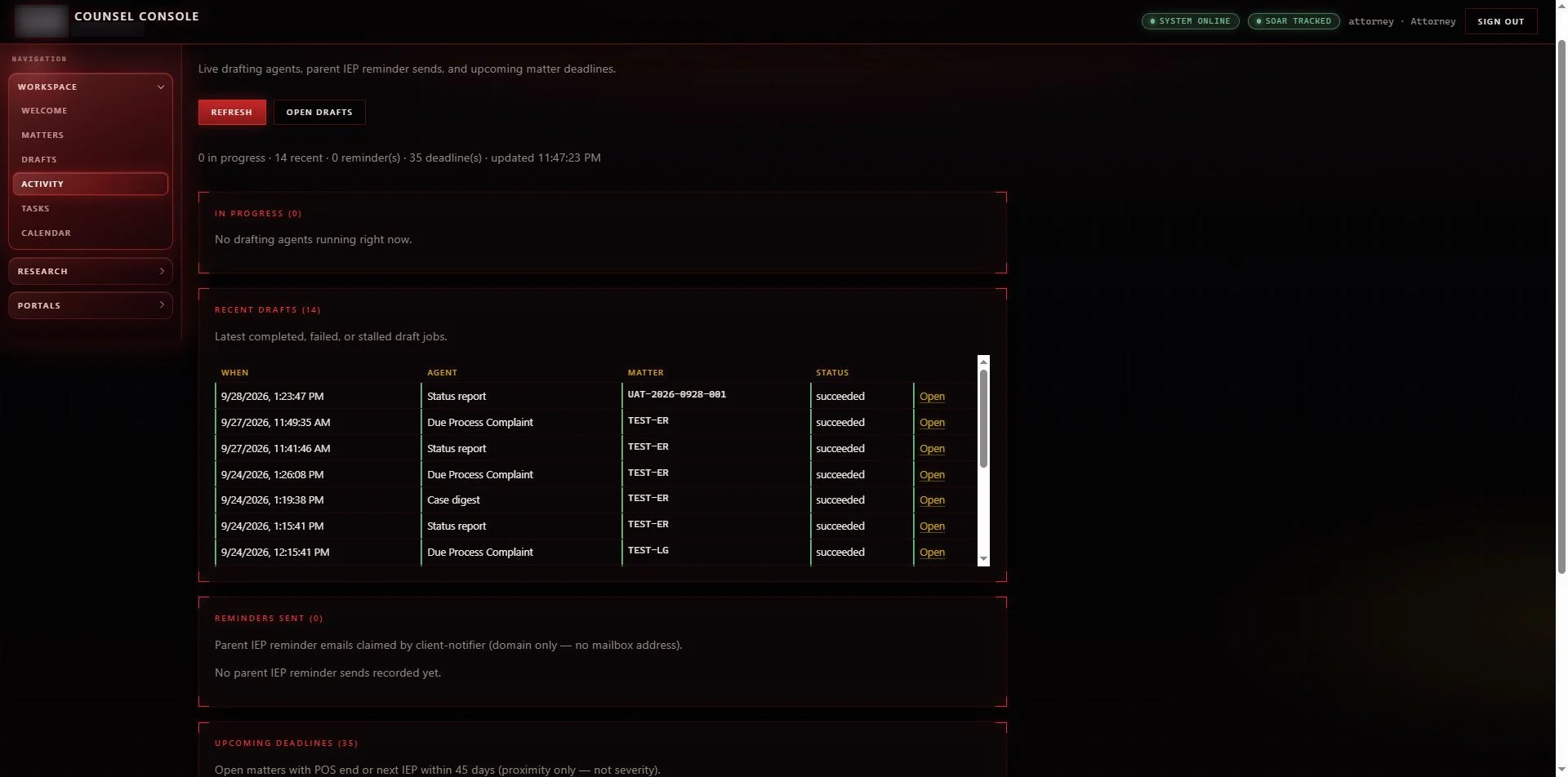
Drafting jobs by agent and matter, parent IEP reminders logged by domain only, and deadlines coming due.
Due Process Complaint drafts are attorney-only and use [STUDENT] placeholders. The firm reviews; nothing is filed by the system.
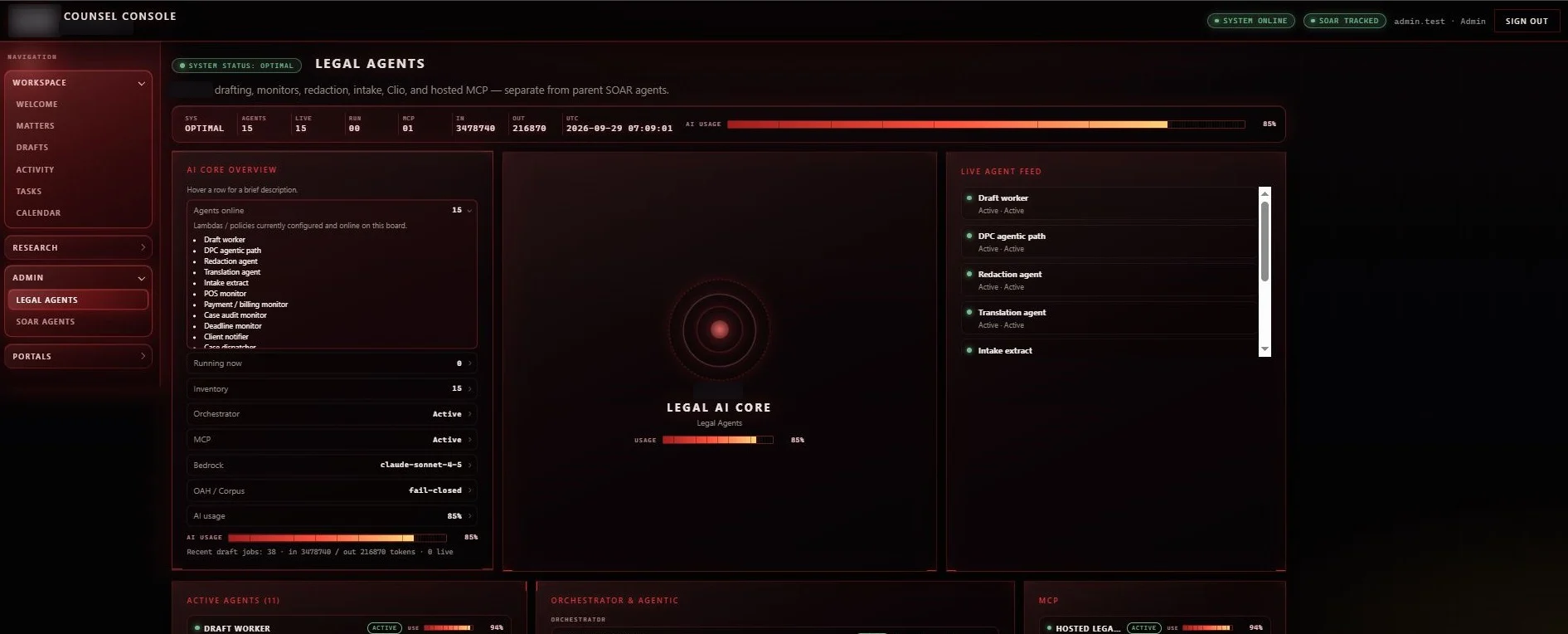
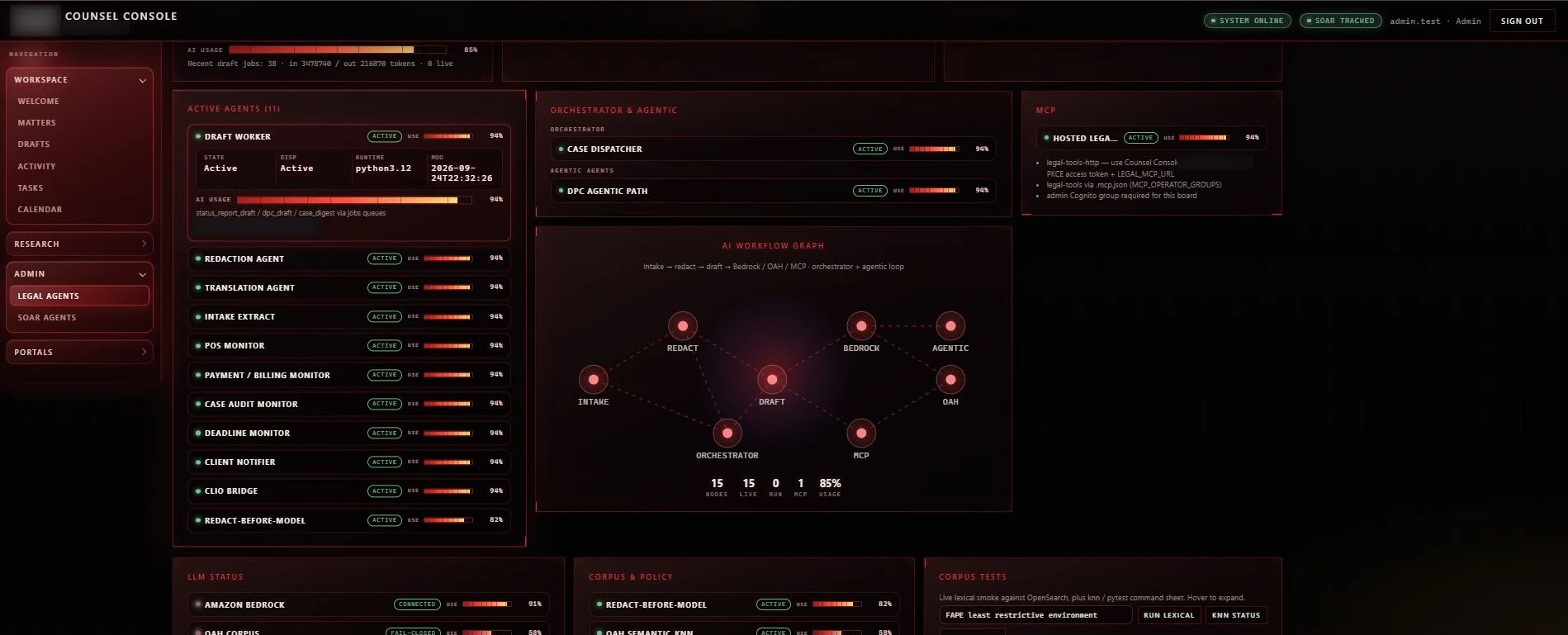
Fifteen legal agents (drafting, monitors, redaction, intake, the Clio bridge, and hosted MCP) with live status and AI usage.
Intake → redact → draft → Bedrock / OAH / MCP, with the case dispatcher and the agentic DPC path. The OAH corpus fails closed.
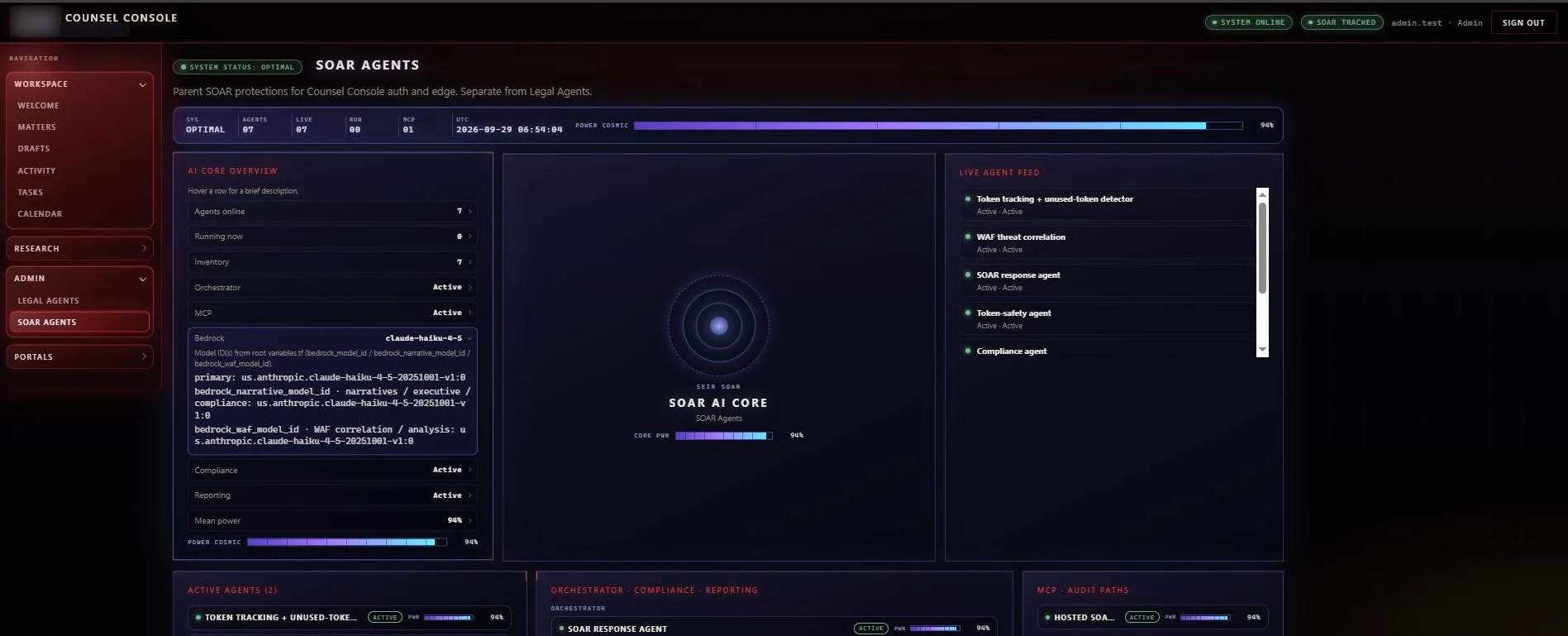
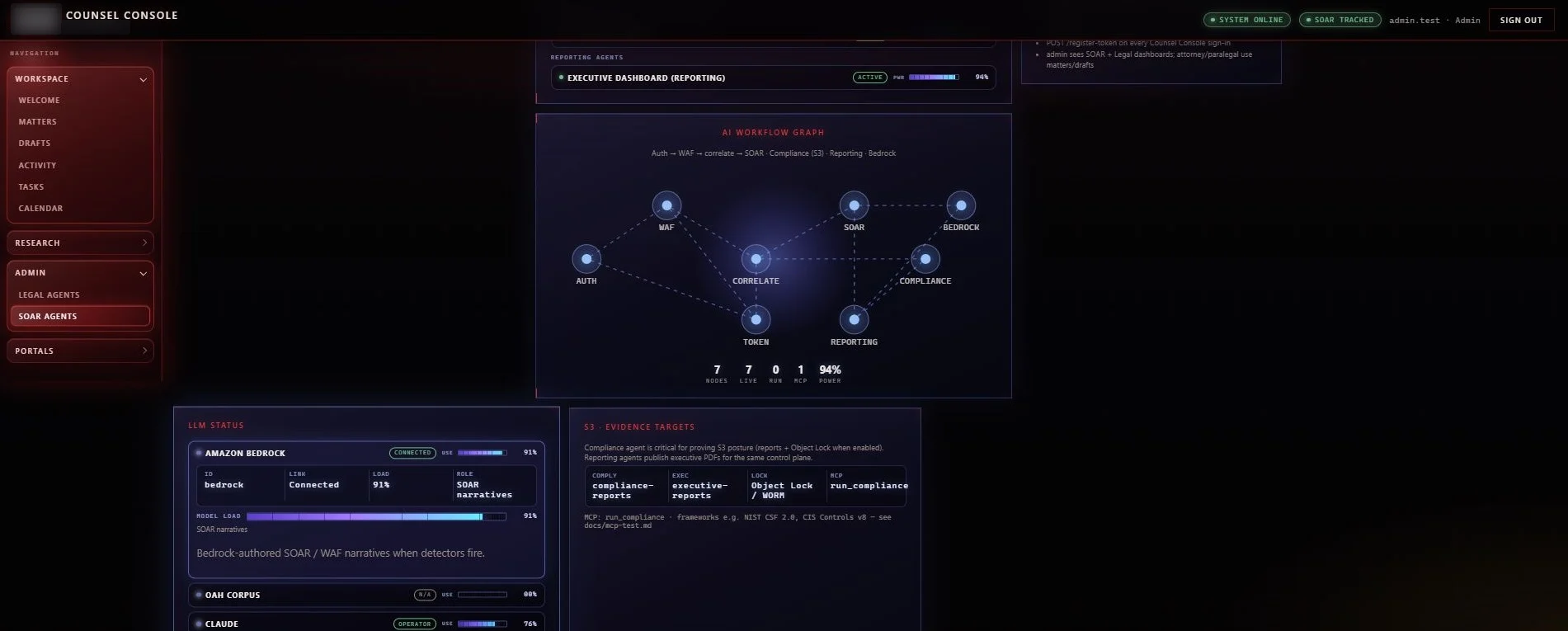
Parent SOAR agents guard the Counsel Console's auth and edge: token tracking, WAF correlation, response, and compliance.
Auth → WAF → correlate → SOAR, with compliance and executive reports written to S3 under Object Lock.
Classify before transmit. Policy, capability, and network path are evaluated independently before a route is chosen.
AWS Lambda roles call Vertex AI RAG Engine through Workload Identity Federation. Corpus IDs live in SOAR's SSM registry.
Packer AMI with S3 as the source of truth, consuming SEIR's jobs queue through SSM contracts only.
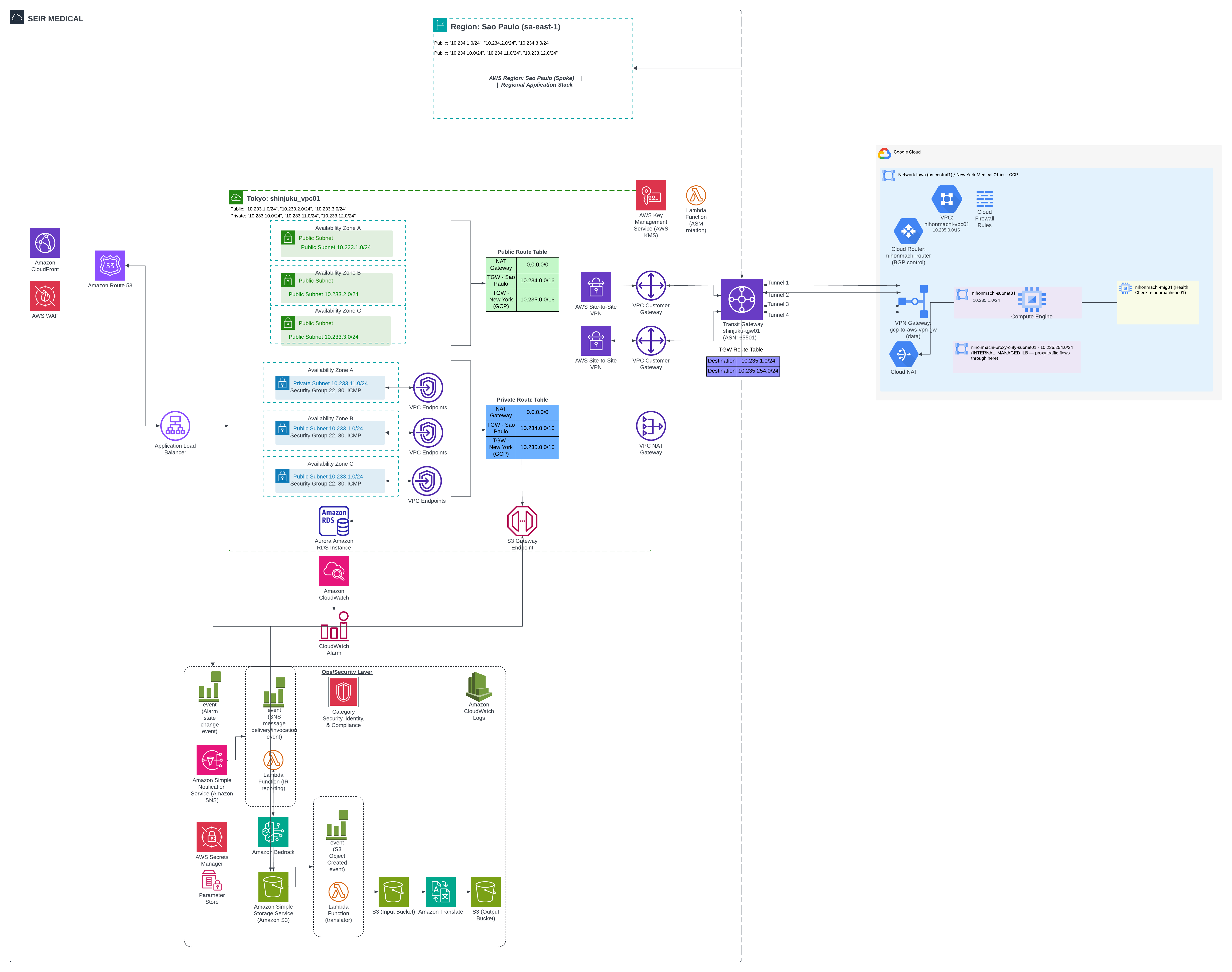
Tokyo data authority, São Paulo spoke, GCP New York over four HA VPN tunnels, plus the IR and translation pipeline.
São Paulo and New York are stateless compute. Every PHI read and write crosses TGW peering or HA VPN into Tokyo.
The ALB only answers CloudFront, and only when the secret origin header matches.
Bedrock drafts and Translate localizes. A human verifies alarm, logs, and config before the report is final.
Alarm → evidence → Bedrock narrative → report bucket, with an S3-triggered Amazon Translate path for Japanese operations.
Four independently deployable stacks, wired through remote state.
Apps run anywhere; syslog durability and personal data stay in Japan over private TGW paths.
One tunnels map drives gateways, tunnels, router interfaces, and BGP peers. Identities come from impersonation, not key files.
An mTLS gateway in front of MCP. kubectl lives only in the executor, and restarts need explicit approval.
Terraform from VPC to runtime, EBS CSI through IRSA, and Kong key-auth and rate limits.
Both legs settle inside one unlockCallback; the scanner filters out liquidity mirages first.
A Balancer flash loan opens and closes the Aave V3 loop, and exit reads live debt.


![AI proposes: drafting: Due Process Complaint drafts are attorney-only and use [STUDENT] placeholders. The firm reviews; nothing is filed by the system.](assets/diagrams/legal/legal-draft-dpc.webp)